Quantity
Initial volume and repeat pattern influence handling, equipment, consolidation and shipment planning.
EXPORT / LOGISTICS
Bulk logistics are assessed with the product and commercial brief. State your preferred format, destination, delivery period and Incoterm from the start.
PLAN FROM THE DESTINATION BACK
Initial volume and repeat pattern influence handling, equipment, consolidation and shipment planning.
Country, port or inland city help reveal route, import, receiving and document constraints.
State whether the critical date is shipment, arrival or production intake, with any flexibility.
Tank access, unloading equipment, pallet handling or other site constraints can affect the viable format.
BULK FORMAT CONTEXT
These common professional formats are assessed against volume, route, receiving conditions, food-contact requirements and commercial terms.
Relevant to suitable overland lanes and receiving tanks; compatibility, cleaning, seals and access need review.
A container-based bulk option whose food-grade specification, loading plan, route and destination acceptance require confirmation.
A modular option for smaller professional lots or handling flexibility, subject to container material, cleanliness and pallet logistics.
A smaller bulk handling format where lining, closure, palletisation, weight and destination practices matter.
COMMERCIAL BASIS / ROUTE
Rules such as EXW, FCA, FOB, CFR, CIF or DAP allocate tasks, costs and risks differently. The selected rule, named place or port and version should be explicit in the commercial discussion.
Departure point, transhipment, destination access, free time and inland delivery assumptions can change the practical offer.
Product readiness, equipment, bookings, documentation, transit and receiving windows should be aligned before dates are promised.
DOCUMENT FLOW
Contract or order, invoice, packing or weight information and the agreed delivery basis.
Specification, lot references, COA and any agreed certification or analysis evidence.
Origin, customs and transport documents depend on the product, route, destination and transaction.
Format, route, Incoterm and document set are confirmed according to the shipment requirements.
FLEXITANK OPERATION
This sequence follows a flexitank container operation at our installations, from container preparation to closure, sealing and transport readiness. Shipment configuration is confirmed against each requirement.
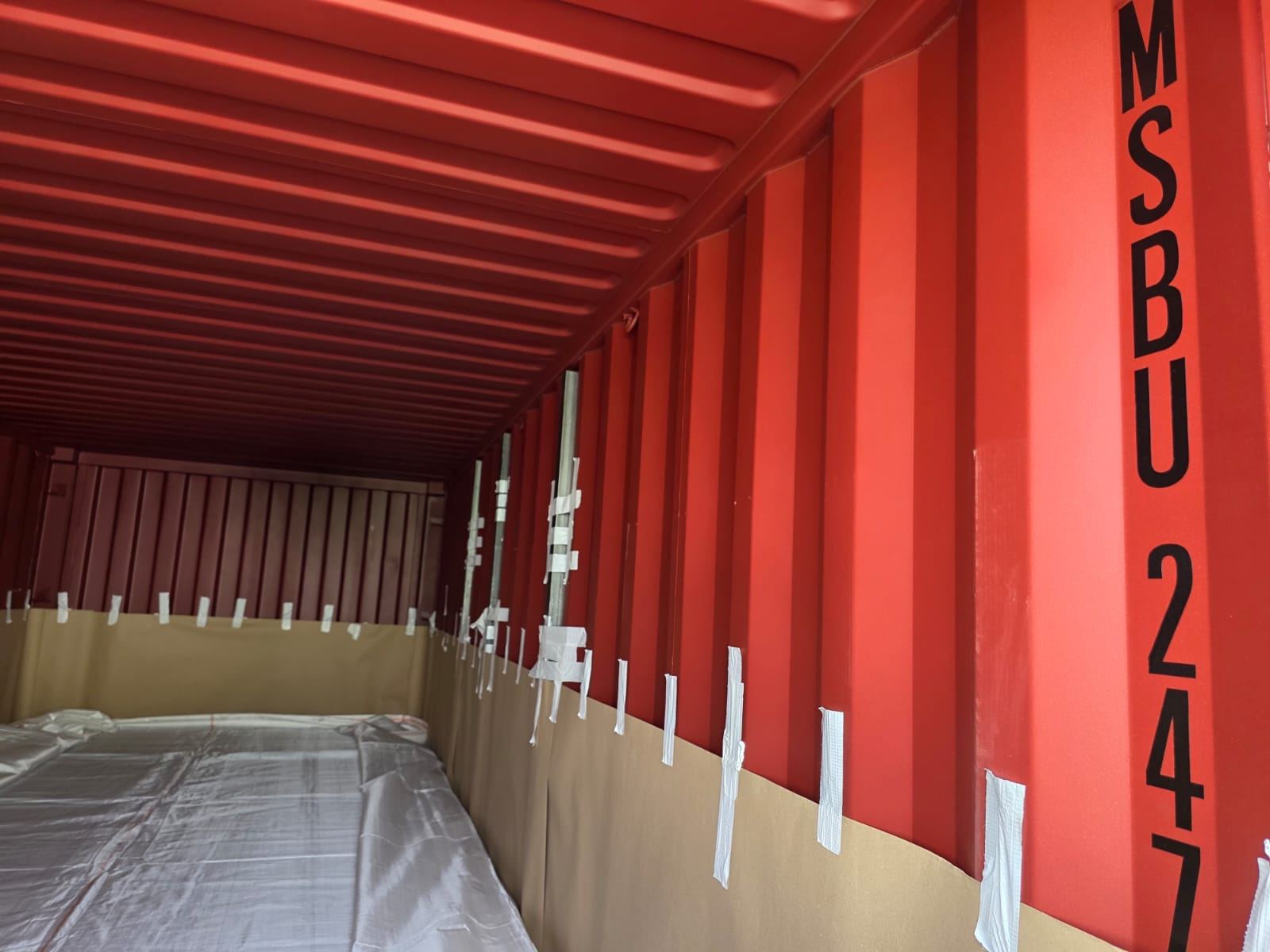
We line and fit the container interior in preparation for this flexitank installation.
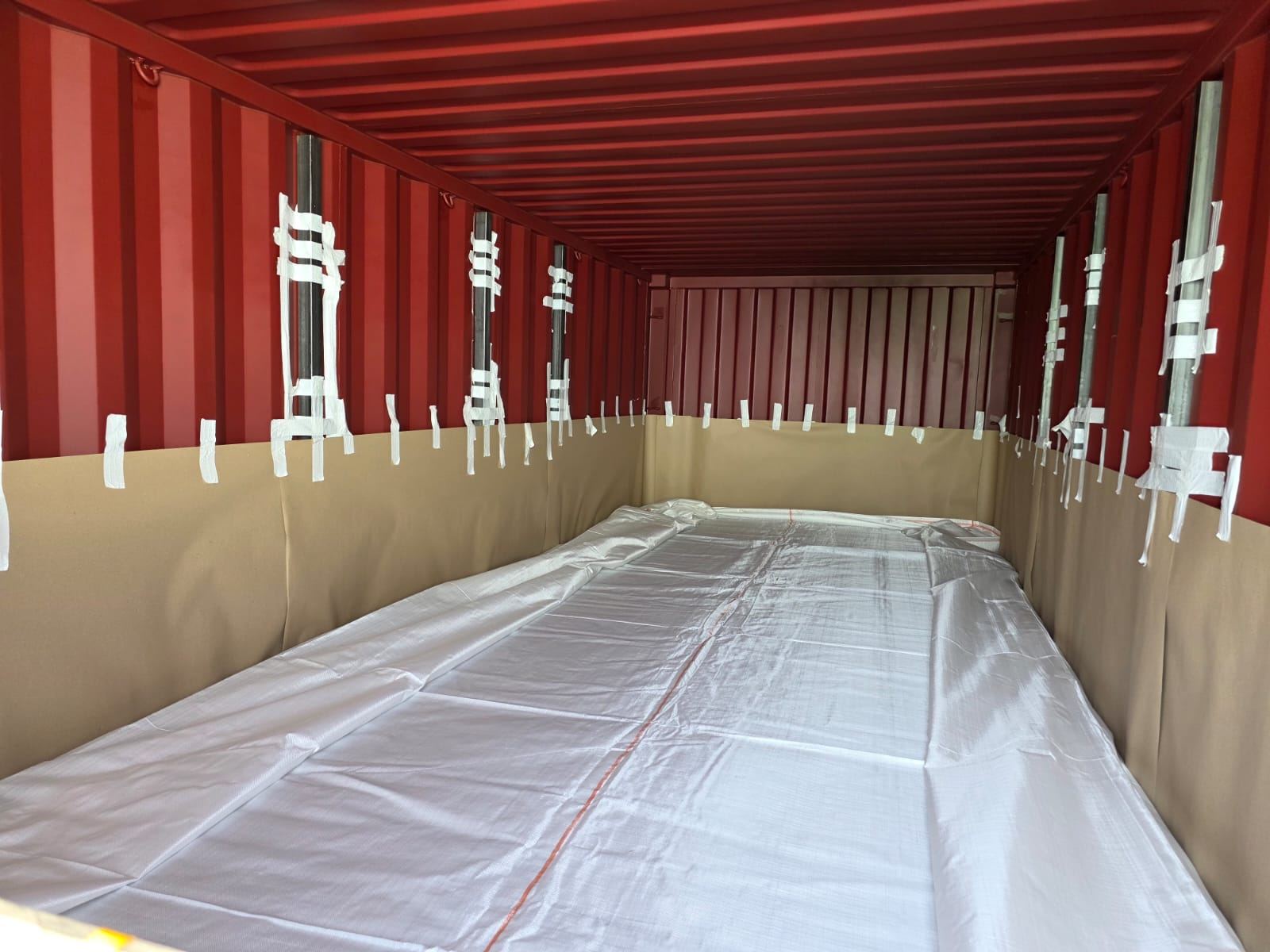
The flexitank is positioned inside the container with its protective structure.
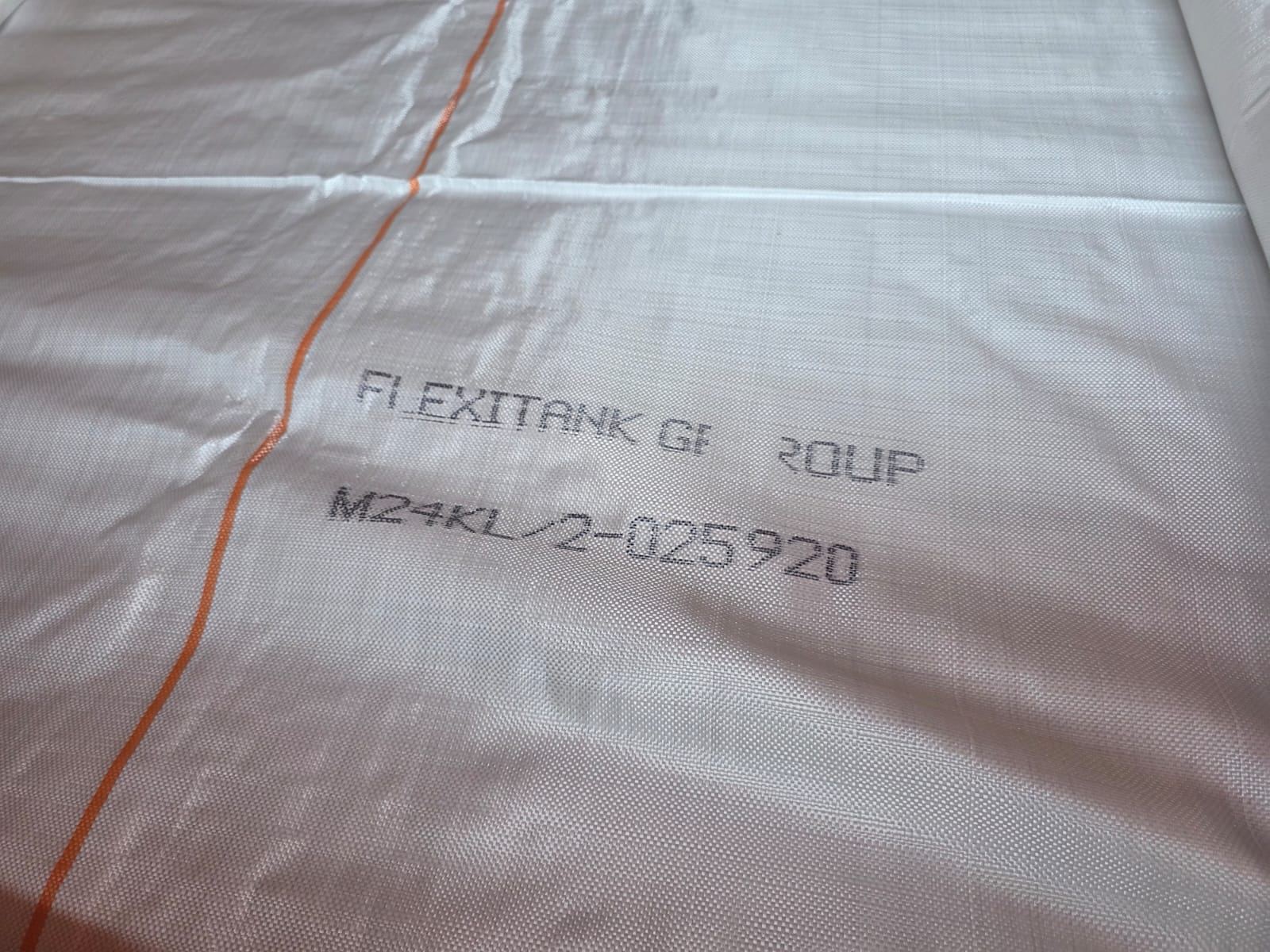
The “M24KL” equipment marking is visible during this flexitank installation.
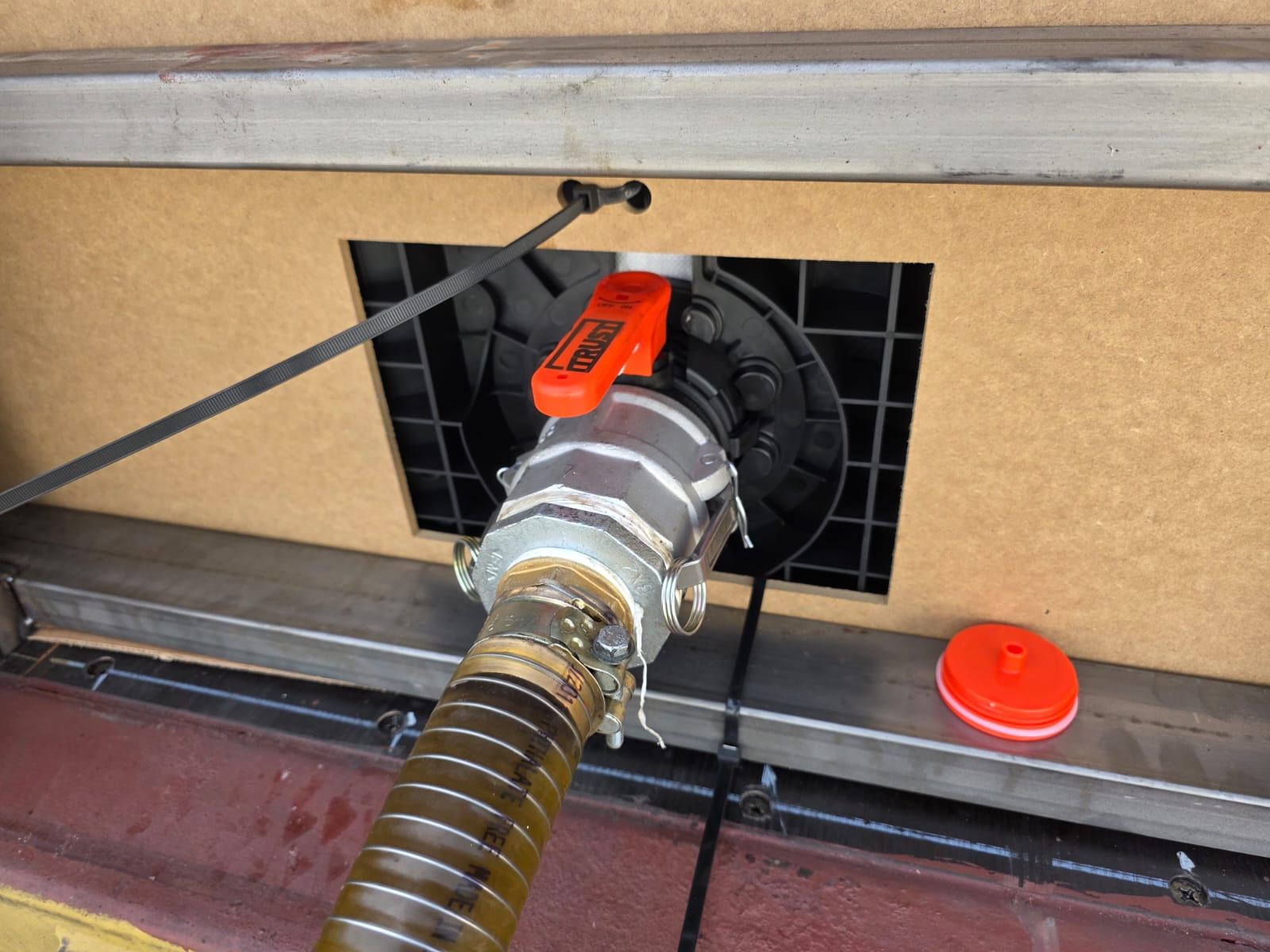
The hose is connected to the outlet assembly during this operation.
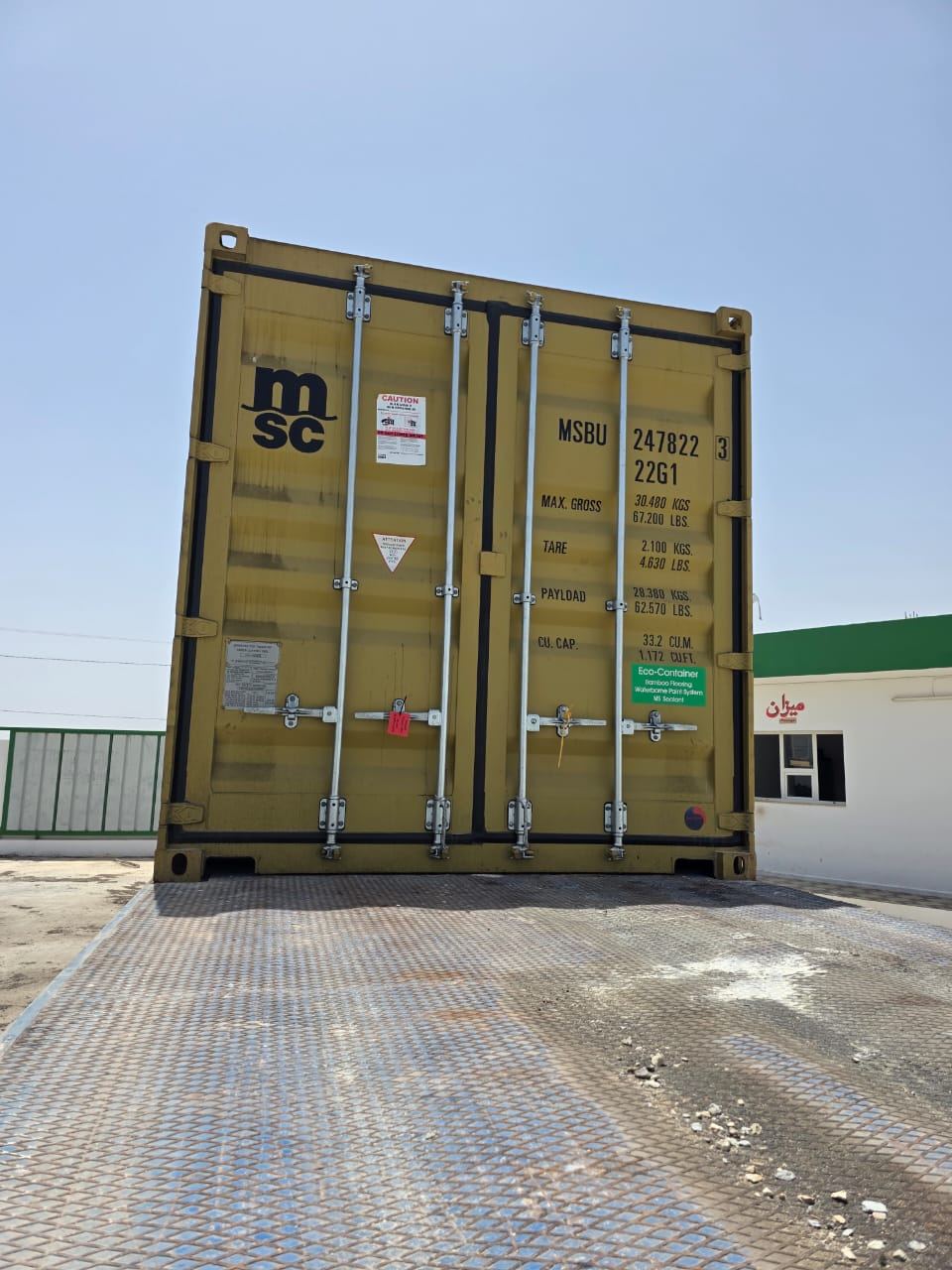
We close the container and show the security seal fitted for this operation.
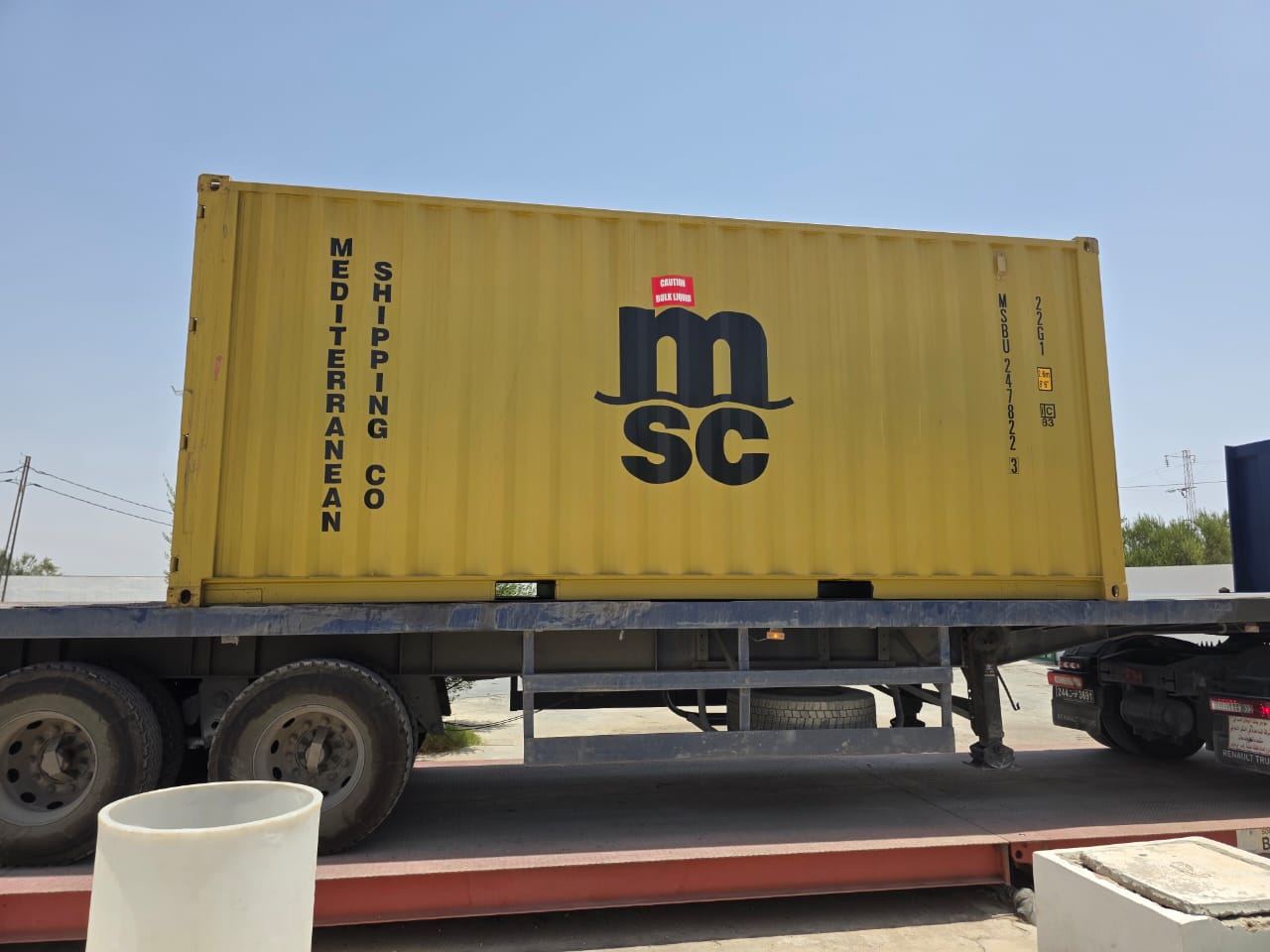
The container is positioned on a road trailer, ready for the next transport stage in this operation.